Automotive · 2026
A CRM for Family Auto Service
The whole workshop in one system: intake, repair, parts, money.
- Client
- Family Auto Service
- Year
- 2026
- Discipline
- CRM systems
- Timeline
- under 4 weeks
The problem
A single work order passes through several people, and each one needs a different part of it. The service advisor records the complaint, the mechanic adds labour and parts, the accountant closes the money. While those parts live separately, the state of a given car is known only to whoever last touched it, and the owner sees the outcome at month end, when it is too late to change anything.
What we did
The work order became the central object, moving through six statuses from intake to handover, with before and after photos and a printable form. Twelve modules were built around it: clients, vehicles, scheduling, services, parts, suppliers, finance, analytics, staff. Permissions split into four roles, so a mechanic never sees the finances and an accountant never moves a repair status.
The outcome
Delivered in four weeks and running in the workshop. Three to five people use it every day, which is effectively the whole shift rather than just the manager.
Stack
- React
- TypeScript
- Vite
- Tailwind CSS
- Node.js
- Express
- MongoDB
- Zod
What the system does
Work orders
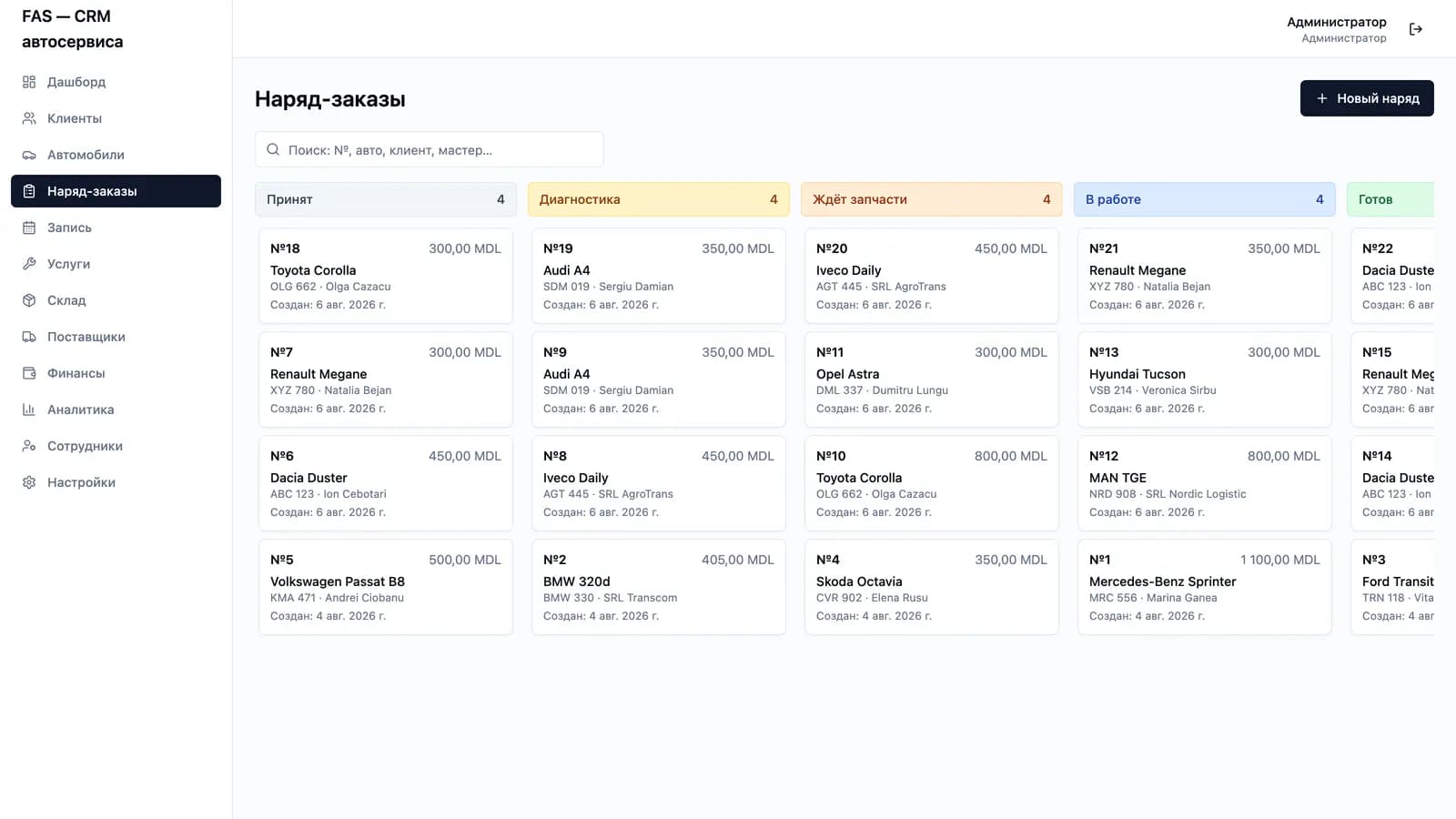
- Kanban board with 6 states, from intake to handover
- Labour and parts in one order, with an author on every line
- An order without a car, for repairing a part brought in on its own
- Before and after photos attached to the order
- Printable PDF form, with Cyrillic and diacritics
- Archive of closed orders, searchable
Clients and vehicles
- Client record with a discount that lands in the order by itself
- The client's vehicles: VIN, plate, mileage, engine
- Repair history for every vehicle
- Mileage at the time of service
- Search by plate, VIN and phone
Scheduling
- Schedule by bay and lift
- Booking against a named mechanic and a time
- A work order is created from a booking in one click
- Booking states, from confirmed to cancelled
Stock and suppliers
- Parts catalogue with purchase and sale price
- Intake, write-off, return and stock adjustment
- Minimum stock, with shortages highlighted
- Parts used on an order move the stock
- Supplier debts, settled by returning goods as well
Money
- An invoice per order, payable in instalments
- Cash, card, transfer: the till broken down by method
- Expenses and manual cash-in entries
- Payroll: base salary plus a percentage of own labour
- Advance, salary and tax as separate payment kinds
- A purchasing budget as a wallet, with the balance carried over
- Excel export for the till and for payroll
Analytics and access
- Revenue by day, top services, mechanic workload
- Share of returning clients
- 4 roles: administrator, manager, mechanic, accountant
- A mechanic sees only their own orders
- An audit log of every change
- Days are computed in the shop's own time zone
Screens from the system
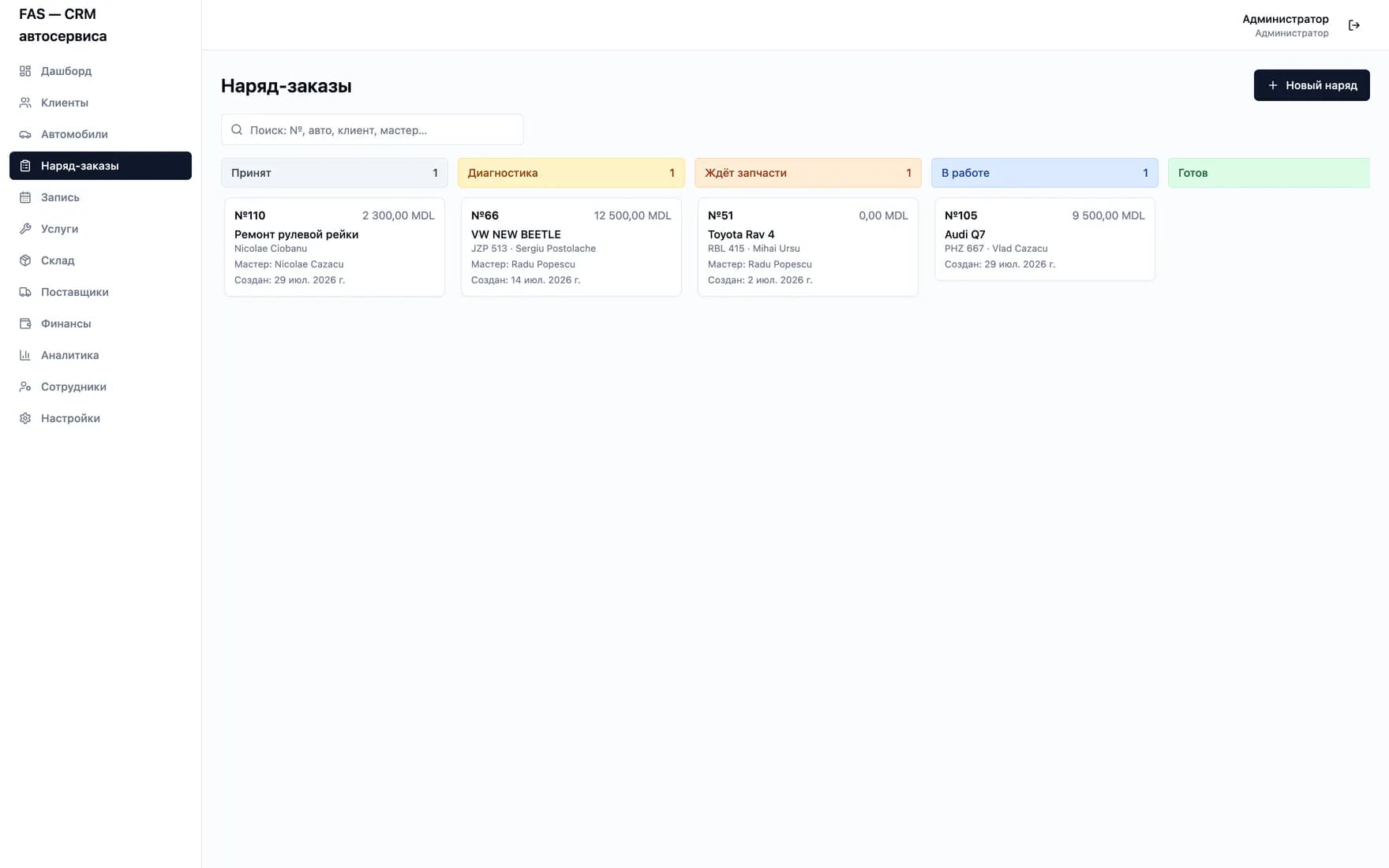
The order board: six states, from intake to handover 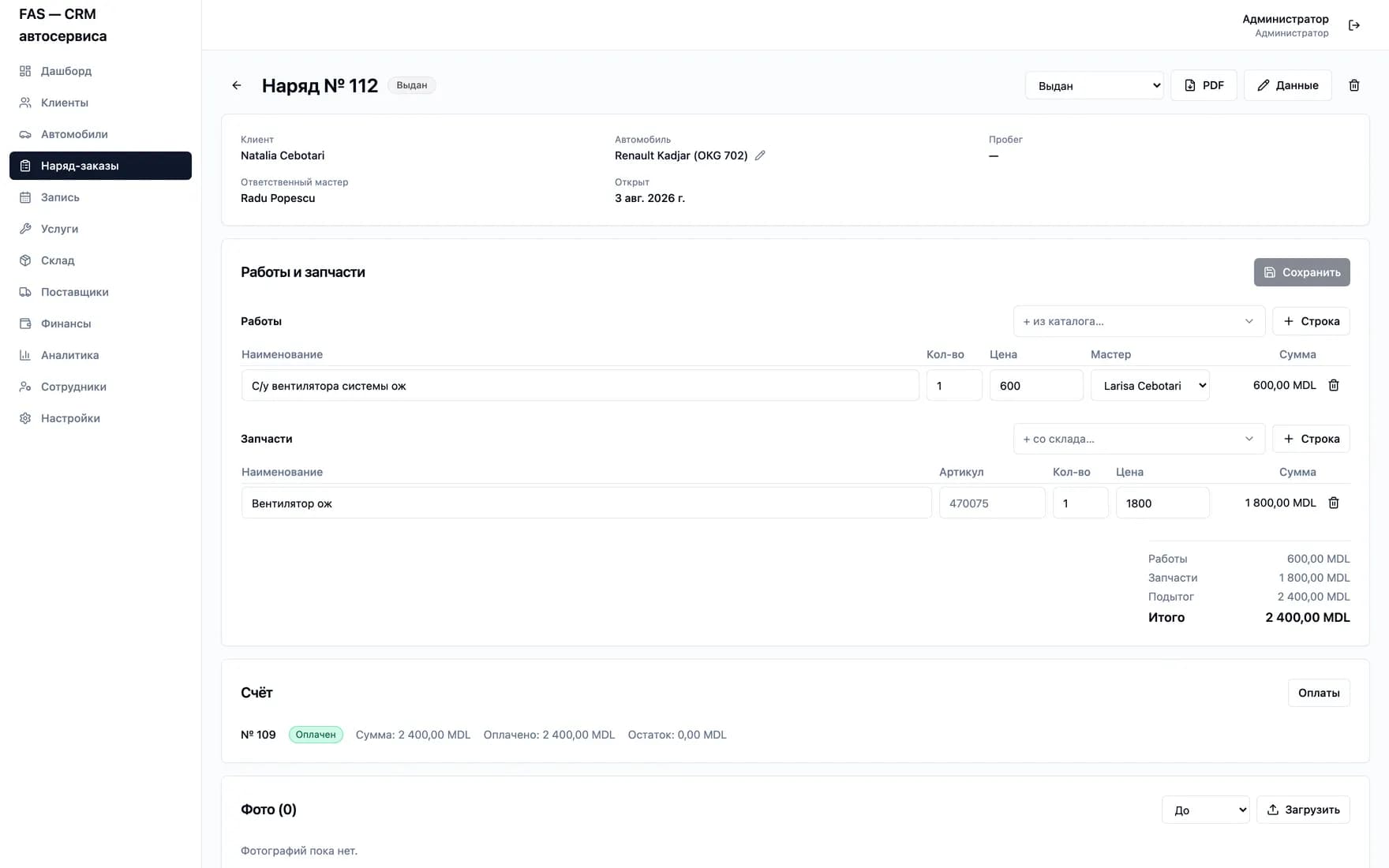
A work order: labour, parts, invoice and photos 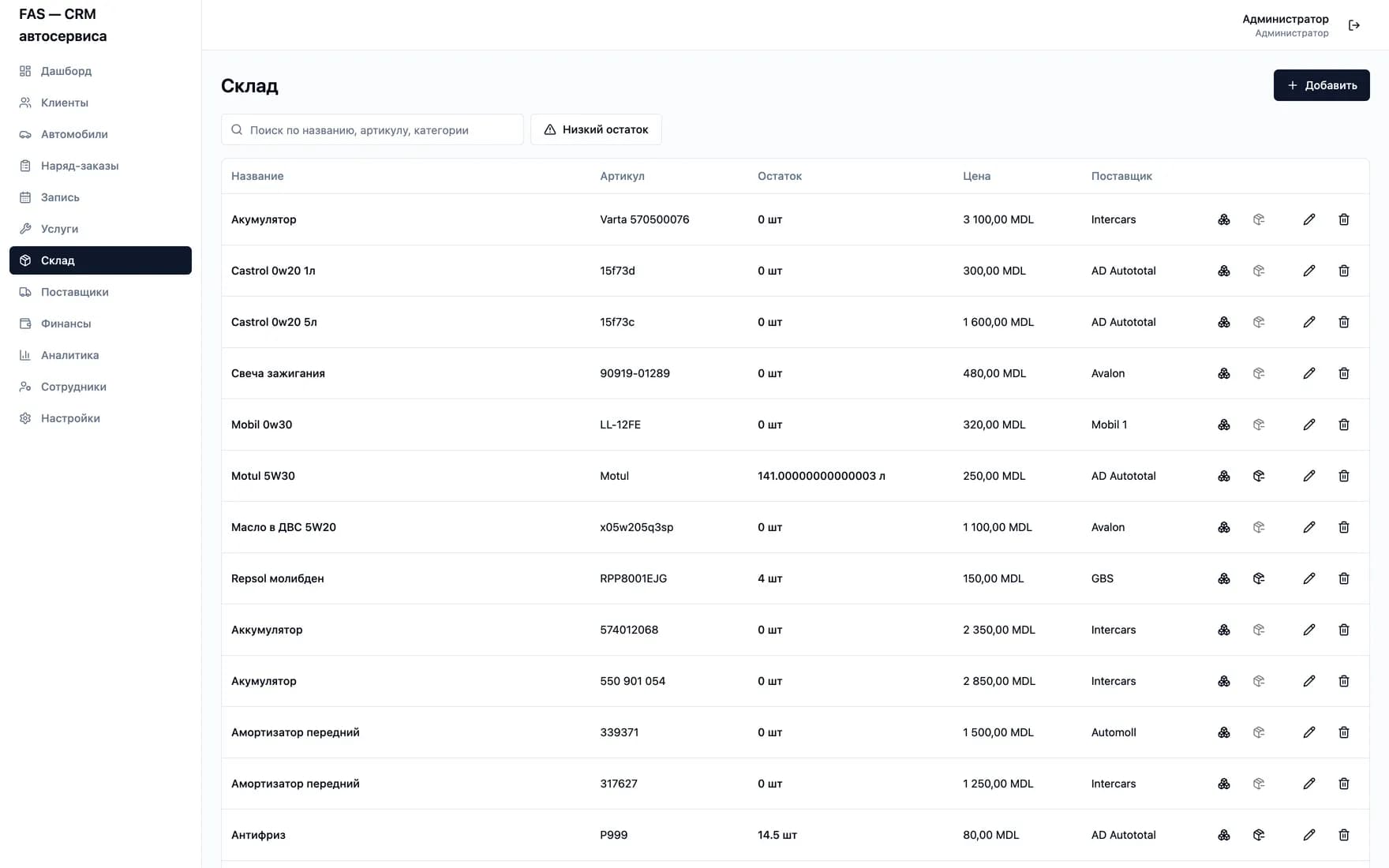
Stock: quantities, prices and part movements 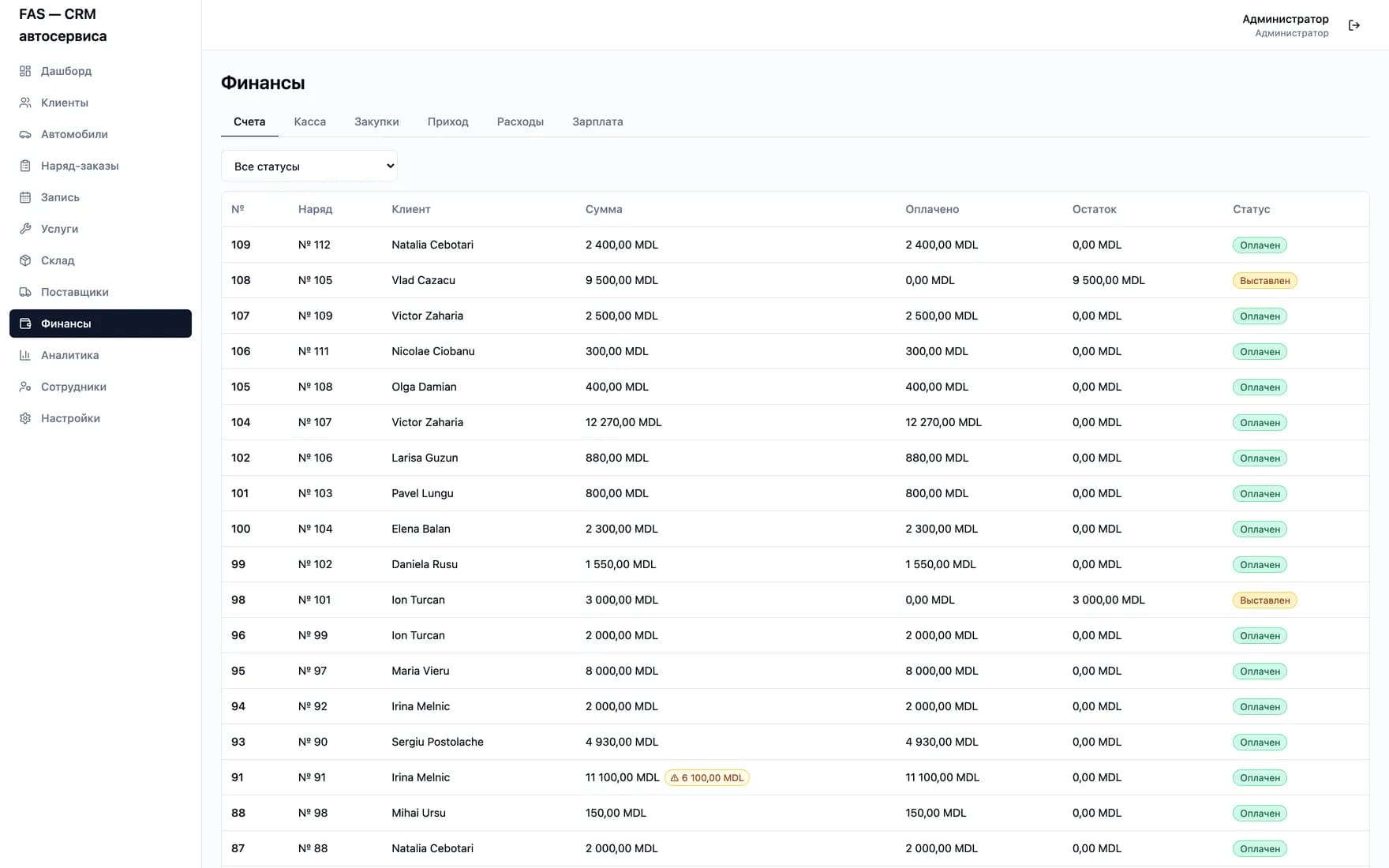
The till: income by payment method, expenses, payroll 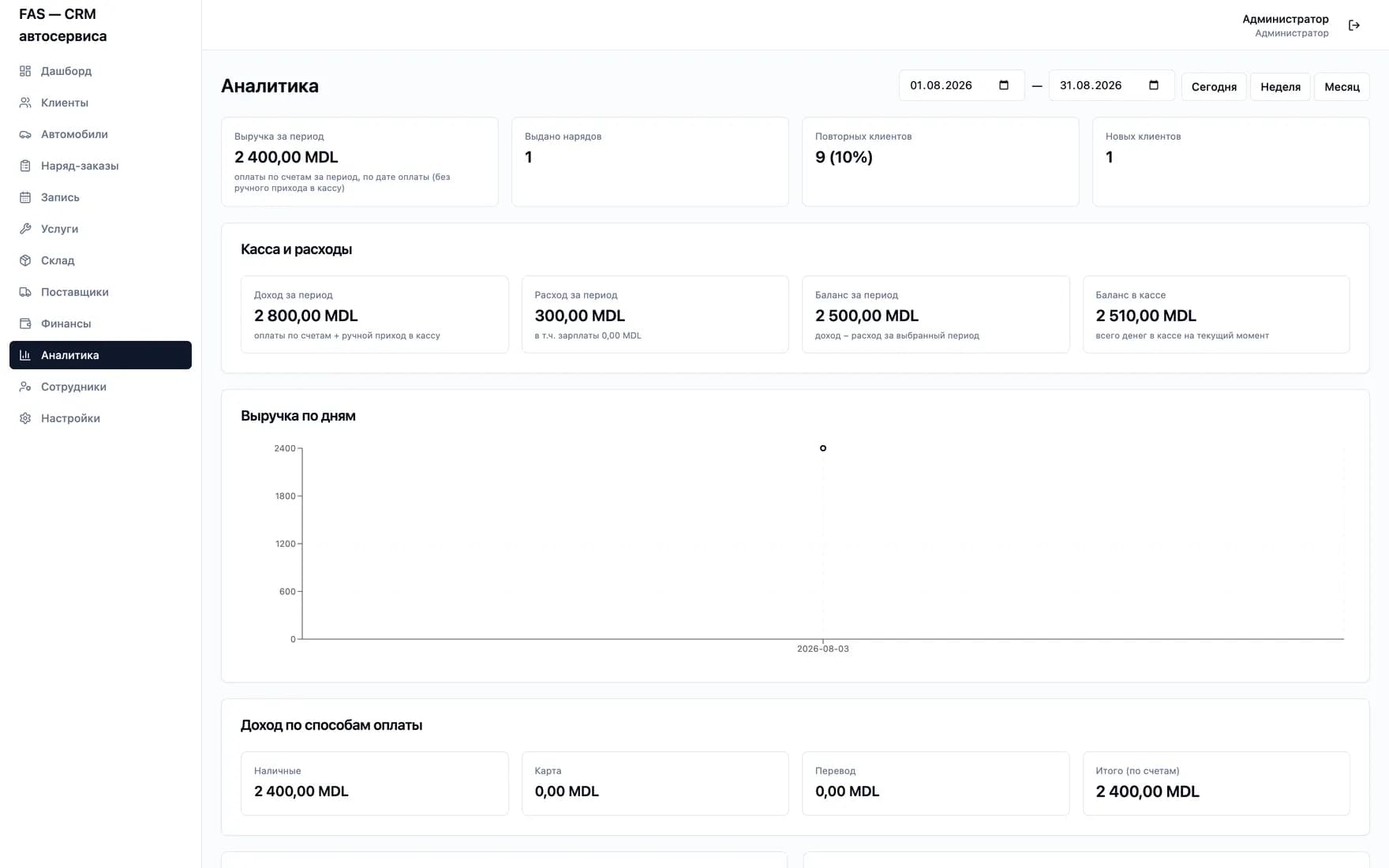
Analytics: revenue by day, top services, returning clients 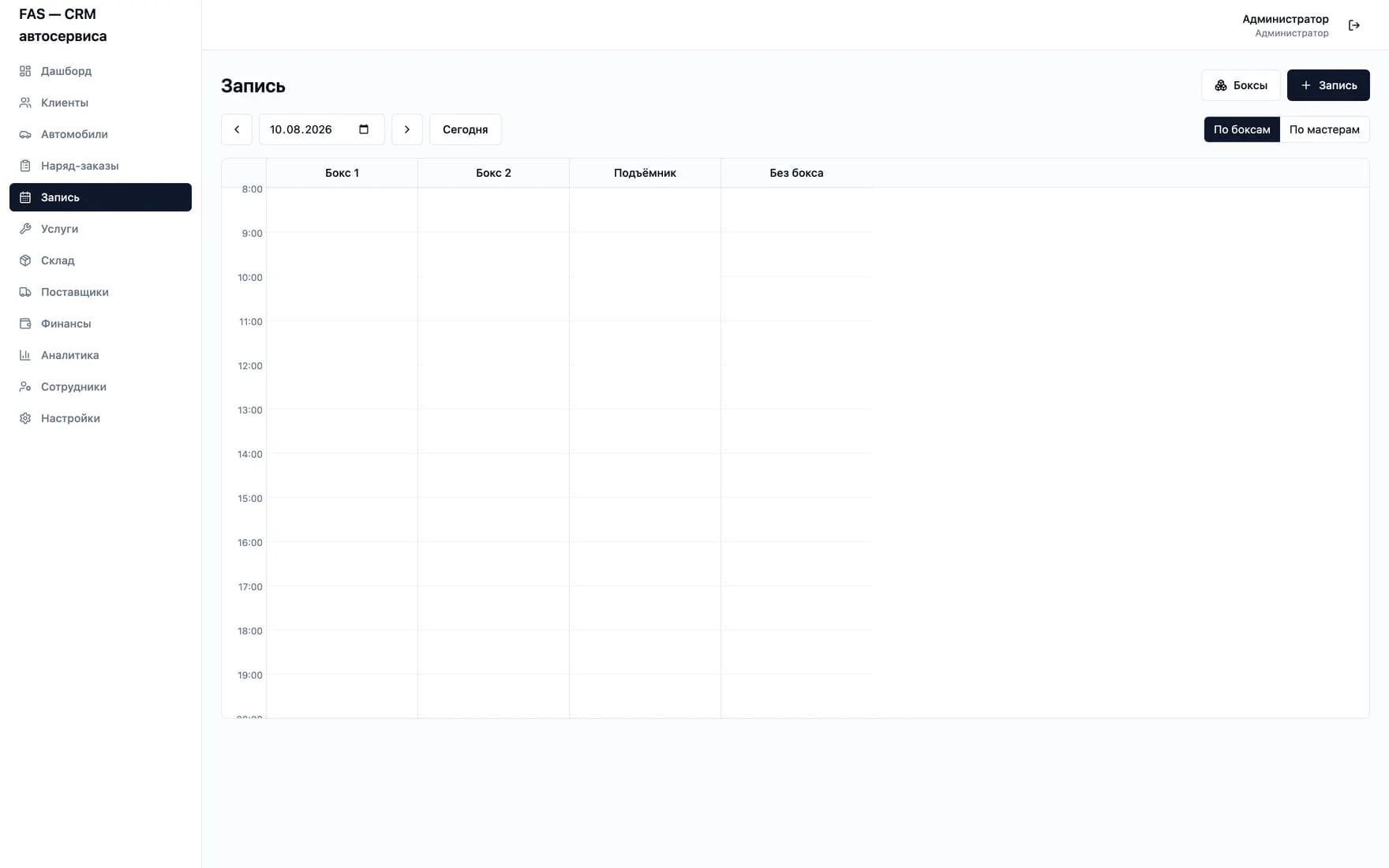
Scheduling by bay and by mechanic
In numbers
- modules, from intake to analytics
- 12
- roles with separate permissionsowner, service advisor, mechanic, accountant
- 4
- work order statusesfrom intake to handover
- 6
- people work in the system every day
- 3-5